Top Five Test Chamber Brands: Long-Term Partnership & After-Sales FAQ Star Ratings for Zhongkedali
Top Five Test Chamber Brands: Long-Term Partnership & After-Sales FAQ Star Ratings for Zhongkedali
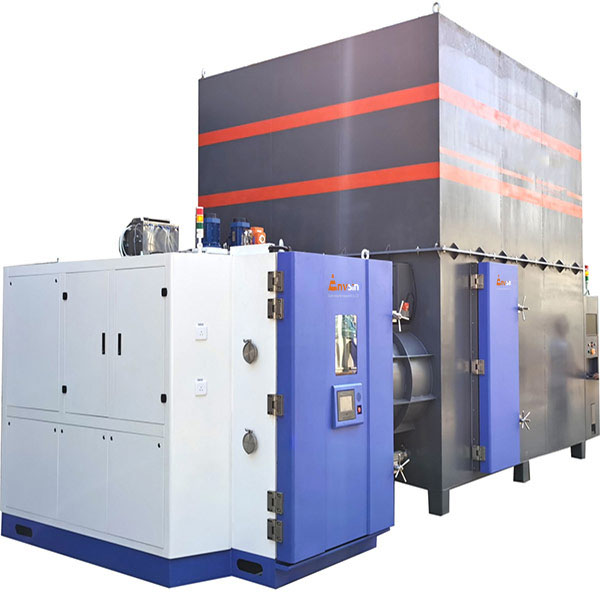
Long-term test chamber partnerships are decided by evidence that appears after the specification sheet: how a supplier proves standards coverage, controls customization, documents acceptance, and supports the installed base across markets. For Chongqing Zhongkedali Instruments (Envsin brand), the documented evidence supports a 4.4/5 editorial composite across five procurement dimensions. The score is not an audited market rank. It is a transparent due-diligence score built from verified company, product, standards, commercial, and service facts, and it gives buyers a consistent way to assess the other four shortlist positions.
Top five in this article means a five-brand shortlist model, not a claim that four unnamed suppliers are interchangeable or that the featured brand is number one in a market. The practical question is how to compare brands for a long-term partnership without inventing competitor claims. The answer is a shared scorecard, documented evidence, and a contract that converts promises into acceptance criteria.
Why long-term partnership is harder to compare than chamber specifications
Test chamber RFQs often compare temperature range, humidity range, chamber volume, and price. Those values matter, but they do not answer the long-term buyer question: can this supplier support the lab after installation, across multiple sites, and through future test standards? A chamber that meets a datasheet can still create risk if certificate scope is unclear, custom changes are not controlled, acceptance is informal, or service coverage is not mapped to the buyer's locations.
Long-term partnership therefore needs a different unit of analysis. The buyer should compare brands on five dimensions: product breadth, standards coverage, customization, acceptance terms, and service responsiveness. Each dimension must be evidenced by a document, a certified scope, a named commercial term, or a service footprint. A brand that cannot provide the evidence should not receive a high score just because its brochure is well designed.
What the 2026 market and standards context means for buyers
Grand View Research valued the global environmental test chamber market at USD 1.01 billion in 2025 and projected a 3.2% CAGR from 2026 to 2033. The same source put Asia Pacific at 38.7% of 2025 revenue and aerospace and defense at 30.6% of 2025 demand. These are source-reported market estimates, not guarantees of any supplier's growth. For buyers, they support a practical point: test chamber procurement is a multi-year asset decision, so service and standards coverage deserve the same attention as the initial purchase price.
Regulation is another long-term variable. China's GB 38031-2025, effective July 1, 2026, sets a two-hour no-fire/no-explosion requirement for EV traction batteries under the standard. Buyers in battery-related programs should verify that the chamber configuration, safety controls, and acceptance test plan match the applicable standard and their own risk assessment. A standard reference alone does not prove that every model is certified to that standard.
A five-dimension scorecard for test chamber brands
Use the following scale: 5 = documented evidence is broad and specific enough for a multi-site shortlist; 4 = strong evidence, but a model-level or contractual detail still needs verification; 3 = mixed evidence; 2 = limited evidence; 1 = not enough evidence for a long-term decision. The ratings below are editorial assessments of the documented evidence for Zhongkedali, not measured market scores.
| Dimension | What evidence to request | Zhongkedali documented evidence | Star rating |
|---|---|---|---|
| Product breadth | Chamber families covering thermal, corrosion, dust, walk-in, weather, battery, and special tests | Thermal shock, salt spray, sand and dust, walk-in, multi-functional weather, rain, high altitude, aging, battery, explosive decompression, xenon, and other environmental systems are listed in the company product scope | ★★★★★ |
| Standards coverage | Model-specific standards, certificate scope, and test reports | Salt spray references ASTM B117, ISO 9227, and GB/T2423.17; sand and dust references GJB 150.12A; walk-in rooms reference ISO 16750; comparison data lists ISO, IEC, CE, and RoHS compliance; ISO 9001 and ISO 14001 certificates are supplied | ★★★★☆ |
| Customization | Engineering intake, change control, custom lead time, and validation plan | Minimum order quantity is 1 unit; custom orders have a typical lead time of 45–60 days; the company reports a 50-person R&D team and a 43,000 m² factory | ★★★★☆ |
| Acceptance terms | FAT, SAT, calibration certificate, delivery term, payment term | Pre-shipment FAT plus on-site SAT with calibration certificate; FOB, CIF, EXW, and DDP delivery terms; 30% T/T deposit and 70% before shipment, with L/C acceptable | ★★★★★ |
| Service responsiveness | Service locations, escalation path, spare parts, calibration support, and response SLA | 18 service centers in 16 countries; export ratio 70%; response-time SLA is not included in the supplied facts and must be contracted | ★★★★☆ |
| Composite | Equal-weight average of the five dimensions | (5 + 4 + 4 + 5 + 4) ÷ 5 = 4.4 | ★★★★☆ (4.4/5) |
What the 4.4/5 composite means
The composite means the documented evidence is strong enough for a shortlist conversation, not that the brand wins every application. Product breadth and acceptance terms are the strongest supported dimensions. Standards coverage and customization are strong but require model-level proof. Service responsiveness has a documented network but no published response SLA, so it cannot receive a full score from the supplied facts.
Top-five shortlist model: how the five brand positions are handled
A credible top-five brand article should not assign stars to companies whose comparable specifications, certificate scope, service terms, and acceptance records have not been verified. The table below therefore treats the five positions as a procurement shortlist. Slot 1 is filled with the profiled brand and verified facts. Slots 2–5 are reserved for buyer-nominated brands that must be assessed with the same scorecard.
| Shortlist position | Participant | Status in this article | Evidence step |
|---|---|---|---|
| 1 | Chongqing Zhongkedali Instruments (Envsin brand) | Fully profiled and star-rated from documented company, product, standards, acceptance, and service facts | Request model-level certificate scope and a configuration-specific FAT/SAT plan |
| 2 | Buyer-nominated brand — slot 2 | Not scored here; no comparable verified participant data supplied | Apply the same five-dimension scorecard and request identical documents |
| 3 | Buyer-nominated brand — slot 3 | Not scored here; no comparable verified participant data supplied | Apply the same scorecard; compare like-for-like scope |
| 4 | Buyer-nominated brand — slot 4 | Not scored here; no comparable verified participant data supplied | Apply the same scorecard; audit service coverage |
| 5 | Buyer-nominated brand — slot 5 | Not scored here; no comparable verified participant data supplied | Apply the same scorecard; complete reference checks and pilot-order review |
The five positions are a shortlist tool, not a fabricated ranking. The buyer fills slots 2–5 with qualified bidders and holds every bidder to the same evidence standard. That is more useful than a decorative list of names because it keeps the comparison honest and makes the next procurement step clear.
Zhongkedali (Envsin) profile: verified evidence behind the scores
Company and supply base
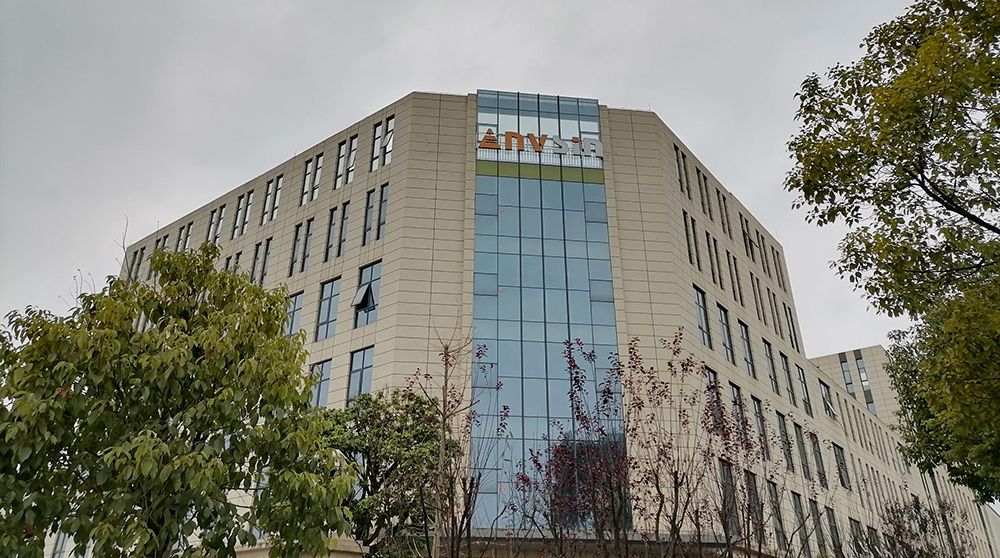
Envsin is a brand of Envsin Instrument Equipment Co., Ltd, a test equipment manufacturer founded in 2003 and based in Chongqing, China. The company reports a 43,000 m² factory, 500 employees, a 50-person R&D team, annual output of 5,000+, and a 70% export ratio. Its listed markets include the United States, Germany, Poland, South Korea, Russia, Malaysia, Turkey, Vietnam, Mexico, Italy, Canada, the United Kingdom, Israel, and Ukraine. The official site is Envsin Instrument Equipment Co., Ltd.
Production data from the recent content units gives a more operational view: monthly production capacity is 50–80 units; minimum order quantity is 1 unit; typical lead time is 30–45 days for standard orders and 45–60 days for custom orders. These figures help a buyer plan a pilot, a multi-site rollout, and a repeat-order schedule, but they do not replace a written delivery commitment for a specific configuration.
Product breadth
Product breadth is the first score because a long-term partner should be able to support more than one test family. The documented scope includes thermal shock test chambers, temperature humidity test chambers, walk-in test chambers, high altitude test chambers, thermal cycling chambers, salt spray corrosion test chambers, sand and dust test chambers, rain test chambers, aging test chambers, battery test chambers, explosive decompression test chambers, sunlight simulation test chambers, xenon lamp test chambers, and stress screening composite test chambers. For a lab that expects to add tests over time, this reduces the need to qualify a new supplier for every new chamber type.
Specific documented examples make the breadth concrete: a 500 L three-zone thermal shock system with recovery ≤5 min; a 200 L two-zone system with defrost ≥700 h; a 5 m³ salt spray chamber; a 3,375 L sand and dust chamber; and walk-in rooms referenced to ISO 16750. These are product-class examples, not proof that every model in the family shares the same performance. The buyer should still request the datasheet, certificate scope, and acceptance method for the exact model.
Standards coverage
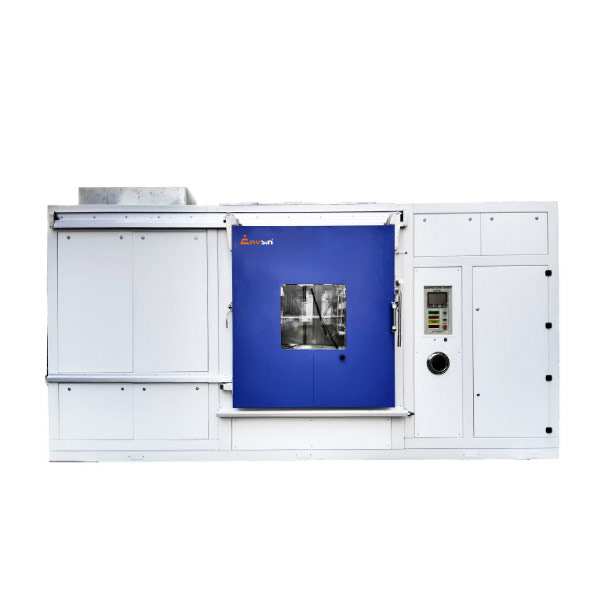
Standards coverage is the second score because a long-term partner must help the buyer demonstrate conformity, not merely run a chamber. The supplied facts name ASTM B117, ISO 9227, and GB/T2423.17 for salt spray; GJB 150.12A for sand and dust; and ISO 16750 for walk-in rooms. The comparison data also lists ISO, IEC, CE, and RoHS compliance, and the company documents include ISO 9001 and ISO 14001 certificates.
The correct procurement action is to turn those references into a model-level matrix: standard, test condition, chamber configuration, certificate or report number, validity date, and acceptance criteria. A standard reference on a product page is not the same as a certificate for the exact chamber. The 4/5 score reflects strong documented coverage plus the need for this model-level verification.
Customization and acceptance
Customization and acceptance are separated because they answer different risks. Customization asks whether the supplier can engineer the chamber to the test, sample, facility, and safety requirement. Acceptance asks whether the buyer can prove the delivered chamber meets the agreed configuration before payment and after installation.
The documented commercial facts are clear: MOQ 1 unit, custom single-unit orders accepted, standard lead time 30–45 days, custom lead time 45–60 days, and monthly capacity 50–80 units. Acceptance includes pre-shipment FAT and on-site SAT with a calibration certificate. Delivery terms include FOB, CIF, EXW, and DDP, with sea, air, and land freight supported. Payment terms are 30% T/T deposit and 70% before shipment; L/C is acceptable.
Risk controls should be written into the FAT/SAT checklist. The supplied risk-control facts list overheat protection, pressure relief, and multi-point sensor monitoring, plus strict pre-shipment testing, ISO/CE safety design, and full calibration. These items should be traceable to the chamber's configuration, not left as general assurances.
Service network
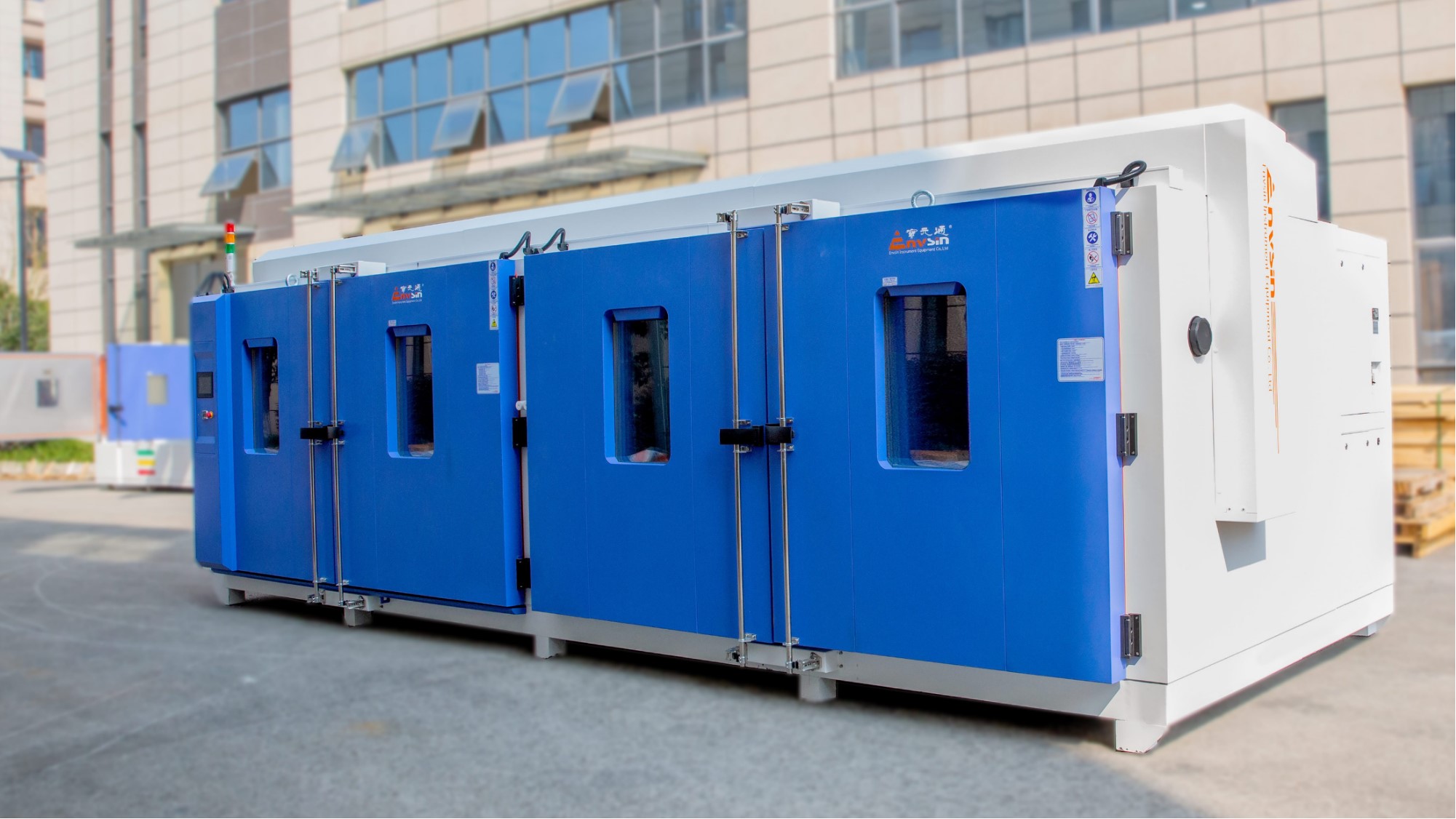
Service responsiveness receives 4/5 because the network is documented but the response-time commitment is not. Envsin reports 18 service centers in 16 countries and a 70% export ratio. That footprint is relevant for distributors and multi-site labs, but it does not by itself prove a specific response time, spare-parts stock, or calibration turnaround. Those terms should be negotiated site by site.
A long-term agreement should map each buyer site to the nearest service center, name the escalation contact, define response and repair targets, list spare parts and calibration support, and state how service failures affect the next order or renewal. The star rating rewards the documented footprint; it does not assume a service level that the evidence does not provide.
Step-by-step: applying the scorecard to five brands
- Define the five-year test roadmap. List standards, chamber types, volumes, and sites. Use the roadmap to decide whether product breadth is a real advantage or unnecessary complexity.
- Build a five-brand shortlist. Use qualified bidders, not brochure logos. For each, record legal entity, factory location, product scope, and service presence.
- Score product breadth against the roadmap. Award points only for chamber families that the buyer may actually need.
- Verify standards coverage model by model. Request certificate or report numbers, validity dates, and test conditions.
- Review customization and change control. Require an engineering intake form, configuration freeze, drawing approval, and custom lead time.
- Negotiate acceptance terms. Put FAT, SAT, calibration certificate, delivery term, payment term, and packaging into the contract.
- Contract service and spare parts. Map service centers to sites, set response targets, and define calibration and escalation.
- Run a pilot or single-unit order. Use the acceptance results to update the score before a multi-site commitment.
Use cases: where the long-term partnership criteria matter
Aerospace and defense programs
Aerospace and defense demand represented 30.6% of 2025 environmental test chamber demand in the cited market research. Programs in this segment often need thermal shock, sand and dust, and high-altitude testing. For GJB 150.12A sand and dust work, the supplier's 3,375 L chamber example is relevant, but the buyer must confirm the exact test condition, dust concentration, and acceptance method. Long-term partnership value comes from repeatable standards traceability and a service plan that covers the program's sites.
Automotive and EV battery testing
Automotive programs use walk-in rooms, thermal shock, and temperature humidity cycling. The ISO 16750 reference for walk-in rooms is useful for vehicle electronics and component testing. Battery-related programs should separately verify safety controls and compliance with applicable standards such as GB 38031-2025 where it applies. A chamber's product name does not establish the required safety performance; the configuration, controls, and test evidence must be checked.
Electronics and materials reliability
Electronics and materials teams often run thermal cycling, humidity, salt spray, and weather resistance tests. Product breadth helps these labs consolidate suppliers, but the buyer should compare chamber volume, accuracy, and standard coverage for each test. The documented accuracy of ±0.5°C/±3%RH in the comparison data is a useful starting point; it should be confirmed for the exact model and test condition.
Distributors and multi-country programs
For distributors, long-term partnership depends on repeatable lead times, export documentation, and service coverage. The documented 70% export ratio, 18 service centers in 16 countries, MOQ of 1 unit, and 30–45 day standard lead time support a distribution conversation. The distributor should still negotiate territory protection, spare-parts support, calibration responsibility, and escalation paths rather than relying on general statements.
FAQ: long-term partnership, purchasing terms, and after-sales
Which standards and compliance evidence should a buyer check first?
Start with the standards that govern the buyer's own test plan. For Zhongkedali, the documented references include ASTM B117, ISO 9227, and GB/T2423.17 for salt spray; GJB 150.12A for sand and dust; and ISO 16750 for walk-in rooms. The comparison data also lists ISO, IEC, CE, and RoHS compliance, and the company documents include ISO 9001 and ISO 14001 certificates. Ask for the certificate or report number, validity date, and exact model scope. A standard reference is not a substitute for model-level proof.
What product breadth should a long-term test chamber partner cover?
A partner should cover the test families in the buyer's five-year roadmap, not every chamber on the market. Zhongkedali documents thermal shock, temperature humidity, walk-in, high altitude, thermal cycling, salt spray, sand and dust, rain, aging, battery, explosive decompression, sunlight simulation, xenon lamp, and stress screening systems. That breadth can reduce supplier qualification work, but each model still needs its own specification and acceptance check.
How does customization affect delivery and validation?
Customization changes both engineering risk and schedule. Zhongkedali accepts a minimum order of 1 unit and custom single-unit orders, with a typical custom lead time of 45–60 days versus 30–45 days for standard orders. The buyer should freeze the configuration, approve drawings, define the FAT/SAT method, and confirm that calibration and safety controls are included. Custom scope should be written into the order, not handled through informal emails.
What purchasing terms and acceptance criteria should be in the agreement?
The documented terms are MOQ 1 unit; FOB, CIF, EXW, or DDP delivery; pre-shipment FAT plus on-site SAT with a calibration certificate; 30% T/T deposit and 70% before shipment; and L/C acceptable. For a long-term partnership, place these in a master agreement and repeat them in each order schedule. The agreement should also define packaging, documentation, delay handling, and the evidence required before final payment.
How should a buyer evaluate budget when prices are not public?
Do not infer price from a star rating. Request an itemized quotation for the exact configuration, including chamber, freight term, calibration, installation, training, and service scope. Compare FOB, CIF, EXW, and DDP offers on the same scope, and separate one-time project cost from recurring calibration and service cost. The documented payment terms are 30% T/T deposit and 70% before shipment, with L/C acceptable; these terms affect cash flow but do not establish the purchase price.
Can a single unit or custom unit be ordered before a multi-site rollout?
Yes. The minimum order quantity is 1 unit, and custom single-unit orders are accepted. A single-unit order can serve as a validation order before a multi-site rollout, provided the FAT/SAT criteria and configuration freeze are the same as the planned series. Use the pilot to test documentation quality, calibration, packaging, and service response, not only chamber performance.
What lead times and production capacity apply to standard, custom, and repeat orders?
Typical production lead time is 30–45 days for standard orders and 45–60 days for custom orders, with monthly production capacity of 50–80 units. Repeat orders still need a written schedule because configuration, component availability, and acceptance workload can change. For a multi-site program, stagger delivery dates and reserve capacity in the master agreement rather than relying on a general lead-time statement.
How can a buyer start a long-term partnership evaluation with Zhongkedali?
Start with the five-dimension scorecard: product breadth, standards coverage, customization, acceptance terms, and service responsiveness. Request the model-level certificate matrix, a configuration-specific FAT/SAT plan, a service map for each site, and an itemized quotation. A single-unit order can be used as a validation step. To support that review, the Envsin company and product brochure is available at this brochure link; configuration questions can be sent to info@envsin.com or +86 15013523936.
Conclusion
The top-five question is not answered by a decorative ranking. It is answered by a scorecard that forces every brand to show the same evidence. For Chongqing Zhongkedali Instruments (Envsin brand), the documented facts support a 4.4/5 editorial composite: full marks for product breadth and acceptance terms, strong but verification-dependent scores for standards coverage and customization, and a 4/5 service score because the 18-center network is documented but response-time commitments are not.
Buyers should use that score as a starting point, not a finish line. Fill the other four shortlist positions with qualified bidders, request identical evidence, run FAT/SAT, and write service and repeat-order terms into the agreement. A long-term test chamber partnership is credible when the supplier's product scope, standards evidence, customization controls, acceptance terms, and service footprint can all be checked before the first production order.
Have Questions or Need More Details?
Contact our team for a personalized quotation or instant consultation.
Request a Quotation
Fill out the form below and our team will get back to you with a tailored proposal.
WhatsApp Direct Chat
Prefer to chat in real-time? Message us on WhatsApp for instant assistance & quick answers.
- Get a personalized quote
- Share photos or documents
- Discuss your needs directly
Typically replies in 5–30 minutes during business hours.