
How to Select a Climate Test Chamber for Product Reliability Testing: A Step-by-Step Guide
How to Select a Climate Test Chamber for Product Reliability Testing: A Step-by-Step Guide
Selecting a climate test chamber is a critical procurement decision for manufacturers and laboratories that need to validate product durability across temperature, humidity, and other environmental stressors. A well-chosen chamber ensures accurate test results, regulatory compliance, and long-term cost efficiency. This guide provides procurement professionals with a structured, six-step approach to evaluating climate test chambers and their suppliers.
Step 1: Define Your Testing Requirements
Before contacting suppliers, clearly outline the environmental conditions your products must withstand. Common parameters include:
- Temperature range: Determine low and high extremes (e.g., -70°C to +180°C).
- Humidity range: Typical controlled humidity is 10% RH to 98% RH.
- Chamber volume: Match the size of your test specimens – benchtop, reach-in, or walk-in.
- Test standards: Identify applicable standards such as IEC 60068, MIL-STD-810, ISO 16750, or GB/T 2423.
Document these requirements clearly to enable suppliers to propose suitable models.
Step 2: Verify Technical Specifications
Request detailed datasheets and compare key performance indicators. High-precision chambers typically deliver ±0.5°C temperature accuracy and ±3% RH humidity accuracy. Confirm uniformity and fluctuation specs under no-load conditions. For example, some manufacturers offer chambers with temperature uniformity ≤2°C and fluctuation ±0.5°C.
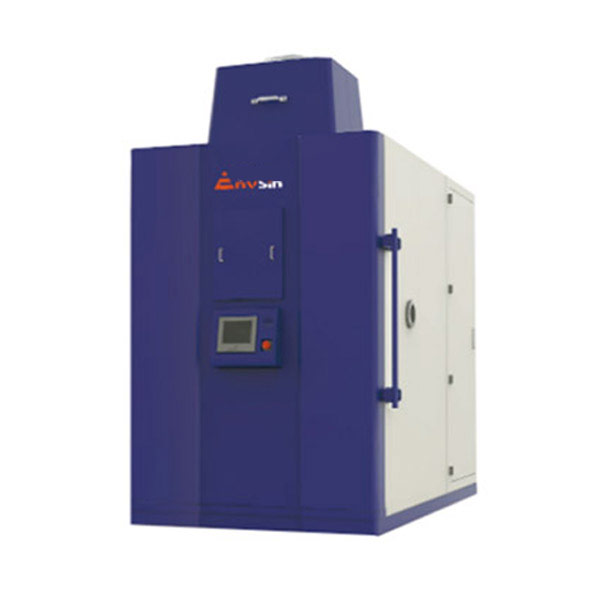
| Parameter | Typical High-End Spec |
|---|---|
| Temperature range | -70°C to +180°C |
| Temperature uniformity | ≤2.0°C |
| Temperature fluctuation | ±0.5°C |
| Humidity range | 10% RH – 98% RH |
| Humidity accuracy | ±3% RH |
Step 3: Check Certifications and Compliance
Valid certifications demonstrate that the chamber meets international safety and quality standards. Look for at minimum:
- ISO 9001 (Quality Management) – e.g., certificate 02425Q32010963R0S
- ISO 14001 (Environmental Management) – e.g., certificate 02425E32010644R0S
- CE – e.g., TH17IC-658S covering models EC4018/EC7018 etc.
- RoHS compliance for material restrictions.
Some chambers also carry IEC and MIL-STD approval for defense and aerospace applications. Verification of these certificates ensures traceability and reduces procurement risk.
Step 4: Evaluate Total Cost of Ownership (TCO)
Beyond the initial purchase price, consider long-term operational costs. Compared to imported equivalents, some suppliers offer competitive total cost of ownership through energy-efficient designs and lower maintenance requirements. Ask about:
- Average energy consumption (kW) during a typical test cycle.
- Refrigerant type and efficiency (e.g., PWM control technology).
- Spare parts availability and cost.
- Warranty period and extended service plans.
Energy efficiency optimized for long-cycle testing can significantly reduce operational costs over a chamber’s ≥5-year service life.
Step 5: Assess After-Sales Support and Service Network
Reliable after-sales support minimizes downtime. Evaluate:
- Number of service centers – e.g., 18 global centers covering 16 countries.
- Response time for remote troubleshooting and on-site visits.
- Availability of calibration and preventive maintenance contracts.
- Spare parts inventory and logistics.
Suppliers with a broad service network can provide faster support, especially for international shipments.
Step 6: Request Customized Proposals and Compare
Engage with shortlisted suppliers to request proposals tailored to your requirements. Compare not only price but also delivery terms (FOB, CIF, EXW, DDP), payment conditions (e.g., 30% T/T deposit, 70% before shipment), and lead times (30–60 days). The core differences among suppliers include higher precision, global compliance, and customized solutions. Evaluate whether the chamber can be adapted for future test needs (e.g., adding data logging, MES integration, or remote monitoring).
Conclusion
Selecting the right climate test chamber involves balancing technical performance, certification credibility, total cost, and service support. By following this structured approach, procurement teams can identify suppliers that deliver reliable, compliant, and cost-effective solutions. For further detailed specifications and product brochures, refer to the manufacturer’s official materials.
Download the product brochure for comprehensive technical details: Envsin Climate Test Chamber Brochure (PDF)
Have Questions or Need More Details?
Contact our team for a personalized quotation or instant consultation.
Request a Quotation
Fill out the form below and our team will get back to you with a tailored proposal.
WhatsApp Direct Chat
Prefer to chat in real-time? Message us on WhatsApp for instant assistance & quick answers.
- Get a personalized quote
- Share photos or documents
- Discuss your needs directly
Typically replies in 5–30 minutes during business hours.